


Oil-Soluble Green Tea Extract for Anhydrous Cosmetics: What “Oil-Soluble” Really Means
Standard green tea extract powder and EGCG are hydrophilic and should not be assumed to dissolve in facial oils, balms or cleansing oils. A product sold as “oil-soluble green tea” may be a botanical oil infusion, a lipophilized catechin derivative or an oil dispersion. These are different ingredients with different composition, testing needs and label implications.
For anhydrous development, identify the exact form first, verify what was measured in the oil-based ingredient, then screen dispersion, sedimentation and oil oxidation in the finished formula. Golden oil color does not prove catechin content.
Written by Blueeyes Bio Technical Content Team
Publisher: Blue Eyes Biotech Co., Ltd.
Technical scope: anhydrous cosmetic formulation, oil-phase ingredient identity and batch quality control.
1. Why Standard Green Tea Extract Does Not Belong Directly in Oil
The main catechins in green tea, including EGCG, carry multiple hydroxyl groups and favor water-rich environments. When dry green tea powder is stirred into a carrier oil, the usual result is a suspension: particles may temporarily disperse, then settle, collect at the container wall or create a gritty layer.
That behavior is not a minor processing problem. It changes dose uniformity from the first use to the last, and it means the formulator cannot describe the powder as dissolved. Research on lipophilized EGCG exists precisely because the parent molecule is difficult to use in lipid systems; fatty-acid modification changes the molecule and its partitioning behavior.[1]
Before selecting an oil-phase ingredient, define the composition and documentation you expect fromcosmetic grade green tea extract, then confirm that the supplied form is genuinely designed for an anhydrous product.
2. Three Different Ingredients Hide Behind “Oil-Soluble Green Tea”
| Commercial Form | What It Actually Is | Key Qualification Point |
|---|---|---|
| Botanical oil infusion | Green tea leaf or extract carried in a plant oil. The oil phase may extract oil-favoring constituents, while much of the hydrophilic catechin fraction should not be assumed to transfer. | Ask for the full composition, leaf-to-oil or extract-to-oil basis, carrier identity and any catechin result measured for the supplied ingredient. |
| Lipophilized catechin derivative | A chemically or enzymatically modified catechin, such as a fatty-acid ester. It is a distinct ingredient, not ordinary EGCG powder in oil. | Verify the exact chemical identity, applicable INCI or labeling name, assay method and market status. Do not transfer parent-EGCG evidence automatically. |
| Oil dispersion or complex | Catechins or extract associated with phospholipids, carriers or other structuring materials so the material can disperse in oil. | “Dispersible” is not the same as molecularly dissolved. Test re-dispersion, sedimentation and dose uniformity after storage. |
The same INCI name on two quotations does not guarantee the same composition. One supplier may offer an oil infusion with a botanical story but little measured catechin, while another may offer a concentrated derivative. Compare the complete ingredient composition and the measured marker, not the product nickname. For background on why assay definitions matter, see ourEGCG vs green tea polyphenols selection guide.
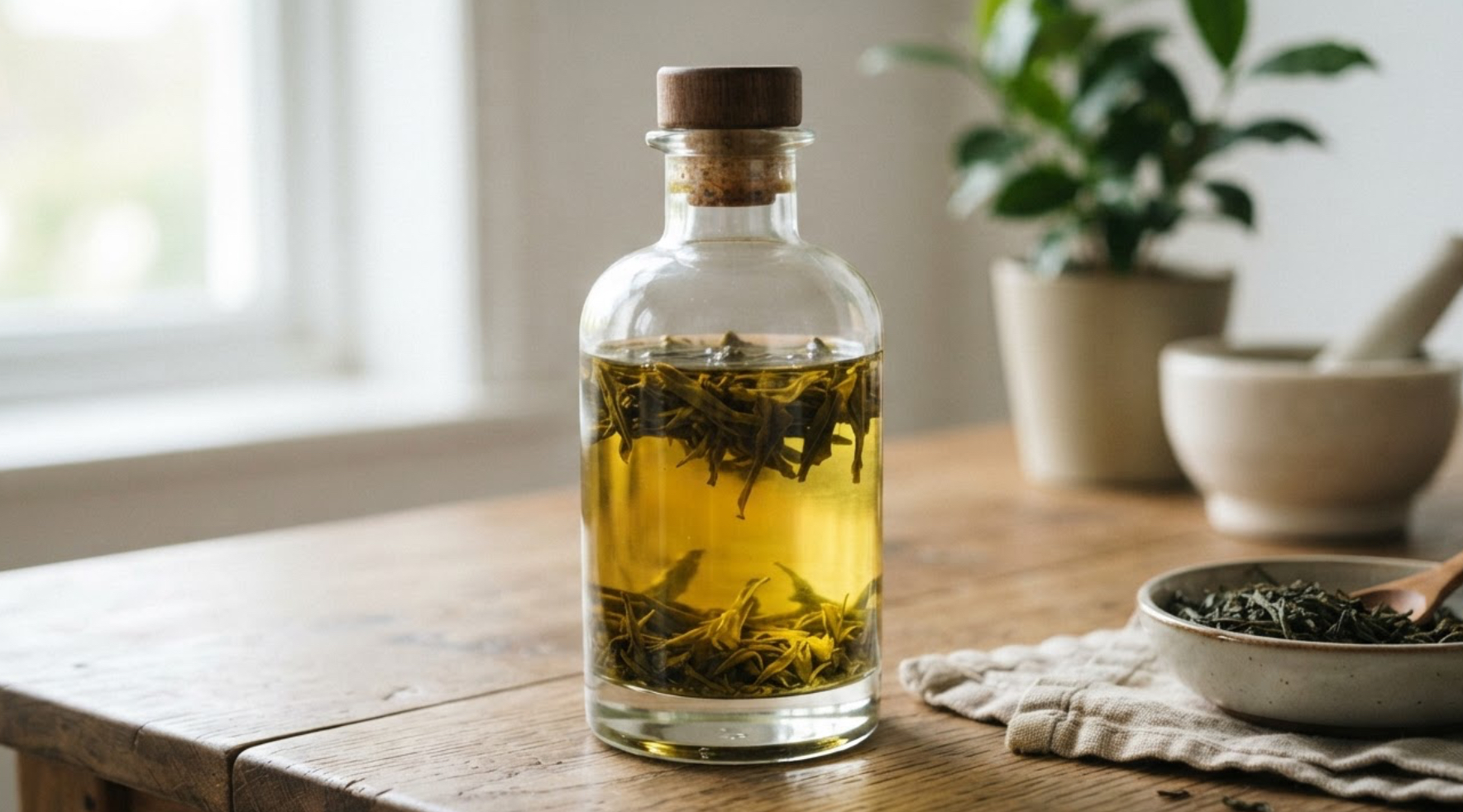
Figure 1: An oil-based green tea preparation in a carrier oil. Oil color and clarity are appearance observations only; they do not quantify catechins or EGCG.
3. How to Verify Catechin Content in an Oil-Based Ingredient
A percentage on a quotation is meaningful only when the analyte, method and sample preparation are defined. Oil matrices can interfere with simple colorimetric readings, and a method validated for dry powder may not work directly in oil.
- Named marker: state whether the result refers to EGCG, individual catechins, total catechins or a broader polyphenol response.
- Matrix preparation: ask how the oil sample was extracted or prepared before analysis and whether recovery was checked.
- Full composition: identify carrier oils, antioxidants, phospholipids and any solvents or processing aids that require disclosure.
- Calculation discipline: catechin delivered by an ingredient can be estimated as inclusion (%) × measured catechin assay (%) ÷ 100 only when the assay applies to that supplied ingredient.
- Do not calculate oil-phase catechin delivery from a dry extract percentage after the extract has merely been stirred into oil.
4. Matching the Form to Facial Oils, Balms and Cleansing Oils
| Product Type | Development Focus | Common Failure to Screen |
|---|---|---|
| Facial oil | Clarity, dropper uniformity and whether the selected form stays dissolved or evenly dispersed. | Sediment in the bottle, variable dosing and haze after temperature cycling. |
| Balm or ointment-style product | Compatibility with wax structuring, cooling profile and re-melting during filling. | Graininess, particle settling before set and color streaks. |
| Cleansing oil | Behavior before and after contact with water, including emulsification and rinse-off appearance. | Loss of uniformity when the emulsifier system is added or when water enters the container during use. |
| Lip or oil-gel product | Heat exposure during manufacture, taste or odor constraints and market-specific ingredient review. | Unverified ingredient identity or claims carried over from water-based green tea studies. |
If the product contains a meaningful water phase, treat it as an emulsion rather than an anhydrous oil. In that case, phase selection and cooldown processing should follow ourgreen tea extract in emulsions processing guide.
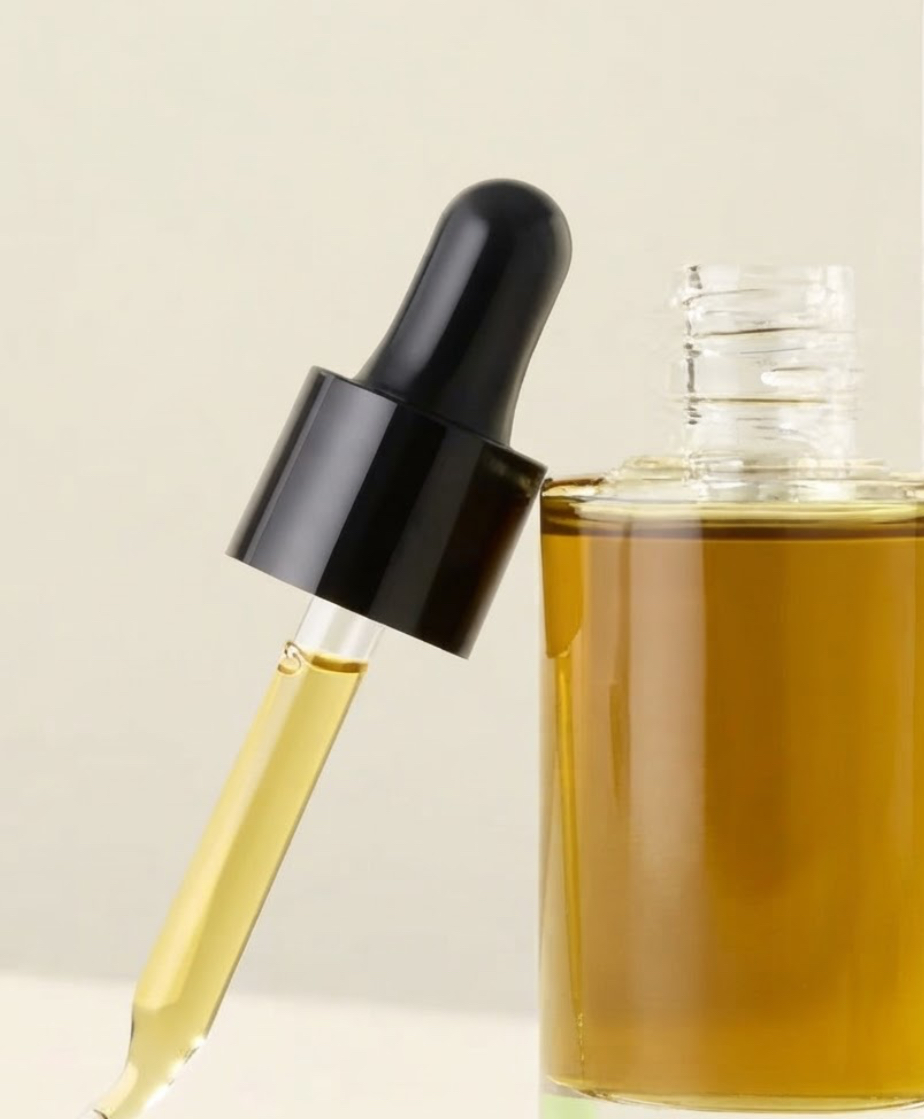
Figure 2: An anhydrous oil or balm texture can support format screening, but appearance alone does not establish catechin content, oxidative stability or shelf life.
5. Stability in Oil Is Mainly an Oxidation and Dispersion Question
Removing water changes the stability problem; it does not remove it. In anhydrous products, the carrier oil itself can oxidize, and a dispersed catechin ingredient can settle or agglomerate.
- Oil oxidation: agree suitable screening tools for the oil system, which may include peroxide value and secondary oxidation measures where appropriate. Interpret trends against the oil blank.
- Light and oxygen: compare packaging headspace, light exposure and closure performance under realistic storage and use.
- Heat history: record melting, holding and filling temperatures for balms and wax systems; repeat appearance checks after cooling and re-warming cycles.
- Dispersion stability: inspect top, middle and bottom samples for sediment or concentration differences when the ingredient is dispersed rather than dissolved.
- Microbiological boundary: low water activity can reduce microbial growth risk, but an anhydrous label is not a substitute for finished-product safety assessment, hygienic manufacture or consideration of water ingress during consumer use.
6. Buyer Checklist for Oil-Soluble Green Tea Quotations
- Exact commercial form: oil infusion, lipophilized derivative or oil dispersion.
- Complete composition, including carrier oil and functional additives.
- Applicable ingredient name for the destination market and any derivative identity documentation.
- Named catechin marker, matrix-suitable assay method and lot-specific result.
- Leaf-to-oil, extract-to-oil or derivative concentration basis, stated without ambiguity.
- Appearance, odor, sediment and re-dispersion instructions.
- Oil oxidation controls, recommended storage and packaging compatibility data.
- Confirmation that the evaluated sample matches the proposed commercial grade and change-notification expectations.
Discuss an Oil-Phase Green Tea Ingredient
Send your product format, carrier oil, target marker and intended addition level. Ask which green tea form is proposed, how its composition is measured and what batch documentation is available.
Sample quantity, charges, shipping, stock status and documentation availability require confirmation for the selected form.
Discuss Oil-Phase Specifications via WhatsApp
Email: [email protected]
Frequently Asked Questions
Can standard green tea extract powder dissolve in facial oil?
It should not be assumed to dissolve. Standard green tea extract and EGCG are hydrophilic; in oil they commonly form a suspension that can settle or dose unevenly. Use an ingredient form designed and documented for oil-phase use.
Does a golden oil color prove a high catechin content?
No. Color can come from the carrier oil and other oil-soluble constituents. Require a named catechin marker measured with a method suitable for the oil matrix, together with the complete ingredient composition.
Is an anhydrous green tea balm automatically stable and preservative-free?
No. Low water activity changes microbial risk, but the product still needs oxidative-stability screening, hygienic manufacture, packaging review and a finished-product safety assessment. Water entering the container during use should also be considered.
References and Evidence Limits
[1]Liu B, et al. “Lipophilization of EGCG and effects on antioxidant activities.” Food Chemistry, 2019. The study supports the distinction between parent EGCG and fatty-acid-modified derivatives; it is not a cosmetic efficacy trial.
[2]“Identification and Antioxidant Abilities of Enzymatic-Transesterification (−)-Epigallocatechin-3-O-gallate Stearyl Derivatives in Non-Aqueous Systems.” Antioxidants, 2021. Relevant to lipophilicity in non-aqueous systems, not proof of performance in a finished cosmetic.
[3]“Great green tea ingredient? A narrative literature review on epigallocatechin gallate and its biophysical properties for topical use in dermatology.” Phytotherapy Research, 2020. General topical background; conclusions still depend on ingredient form and vehicle.
[4]Regulation (EC) No 1223/2009 on cosmetic products. Ingredient identity, labeling and finished-product safety must be checked for the intended market.
Evidence limitation: this article does not verify the composition or catechin content of any commercial oil-soluble green tea ingredient and does not report a Blueeyes Bio batch test. Confirm the exact supplied form and lot documentation before formulation approval.
Technical Summary
Blueeyes Bio’s anhydrous-formulation framework separates oil infusions, lipophilized catechin derivatives and oil dispersions before selection. Because standard EGCG is hydrophilic, buyers should verify ingredient identity, matrix-suitable catechin assay and lot documents, then screen dispersion and oil oxidation in the finished facial oil, balm or cleansing oil.


