


PQQ Disodium Salt: Bioavailability, Stability, and Bulk Sourcing Guide
Formulating with Pyrroloquinoline Quinone requires selecting the disodium salt form (CAS 122628-50-6) over insoluble free acid while verifying bacterial fermentation origins to eliminate toxic synthetic chemical residues. As a redox cofactor, PQQ drives mitochondrial biogenesis by activating CREB and PGC-1α pathways, undergoing up to 20,000 catalytic redox cycles without molecular exhaustion.
Nutraceutical and beverage manufacturers resolve bioavailability barriers through bacterial biocatalysis (≥ 99.0% HPLC purity), cold-water instant solubility yielding crystal-clear orange-red solutions, and multi-target synergy alongside Coenzyme Q10 and NMN across stable formulation pH windows (pH 3.0–6.5).
Written by Blueeyes Bio Technical Content Team
Publisher: Blue Eyes Biotech Co., Ltd.
Technical scope: mitochondrial cellular bioenergetics, bacterial fermentation biocatalysis, and B2B API procurement.
1. Chemical Speciation: PQQ Disodium Salt vs. PQQ Free Acid
When sourcing PQQ disodium salt bulk manufacturer raw materials, formulators must distinguish between the functional disodium salt and the non-functional free acid form.
Pyrroloquinoline Quinone exists in two commercial molecular structures:
- PQQ Free Acid: CAS 72909-34-3, MW 330.21 g/mol. A dark brownish-black insoluble powder. In unbuffered aqueous systems, the free tricarboxylic acid form exhibits extremely low water solubility (< 0.1 g/L at 20°C) and forms dense, gritty precipitates. It is biologically unviable for liquid dosage forms and poorly absorbed across the intestinal mucosa.
- PQQ Disodium Salt: CAS 122628-50-6, molecular formula C14H4N2Na2O8, MW 374.17 g/mol. A vibrant reddish-brown crystalline powder. Formed by coordinating two sodium cations onto the carboxyl groups, this ionic lattice increases water solubility by more than 30-fold (approx. 3.0–5.0 g/L in cold water), delivering rapid dissolution and complete optical clarity.
| Technical Metric | PQQ Disodium Salt (Preferred) | PQQ Free Acid |
|---|---|---|
| CAS Registry Number | 122628-50-6 (Disodium 2-carboxy-4,5-dioxo-1H-pyrrolo[2,3-f]quinoline-7,9-dicarboxylate). | 72909-34-3 (Free tricarboxylic acid). |
| Physical Appearance | Vibrant reddish-brown fine crystalline powder. | Dark brown to blackish granular powder. |
| Aqueous Cold-Water Solubility | High (> 3.0 g/L at 20°C); rapid instant dissolution. | Extremely low (< 0.1 g/L); insoluble particulates. |
| Solution Appearance | Crystal-clear, luminous bright orange-red liquid. | Cloudy suspension with heavy bottom sedimentation. |
| Formulation Suitability | RTD energy drinks, dietary capsules, sublingual tablets, functional shots. | Restricted to crude laboratory chemical intermediate uses. |
2. Production Routes: Bacterial Fermentation vs. Chemical Synthesis
The manufacturing method directly governs API safety profiles, impurity limits, and international regulatory clearance:
- Biological Bacterial Fermentation (Bio-Identical): Blueeyes Bio produces PQQ disodium salt via advanced biological fermentation using non-GMO methylotrophic bacterial strains (e.g., Hyphomicrobium denitrificans or Methylophilus methylotrophus). This produces 100% bio-identical PQQ with zero petrochemical solvent residues, fully compliant with US FDA New Dietary Ingredient (NDI) and GRAS standards.
- Multi-Step Chemical Synthesis: Synthetic routes involve multi-step condensation reactions requiring toxic catalysts, organic solvents, and halogenated intermediates. Incomplete synthesis leaves trace pyridine byproducts and heavy metal residues that fail strict pharmaceutical safety audits.
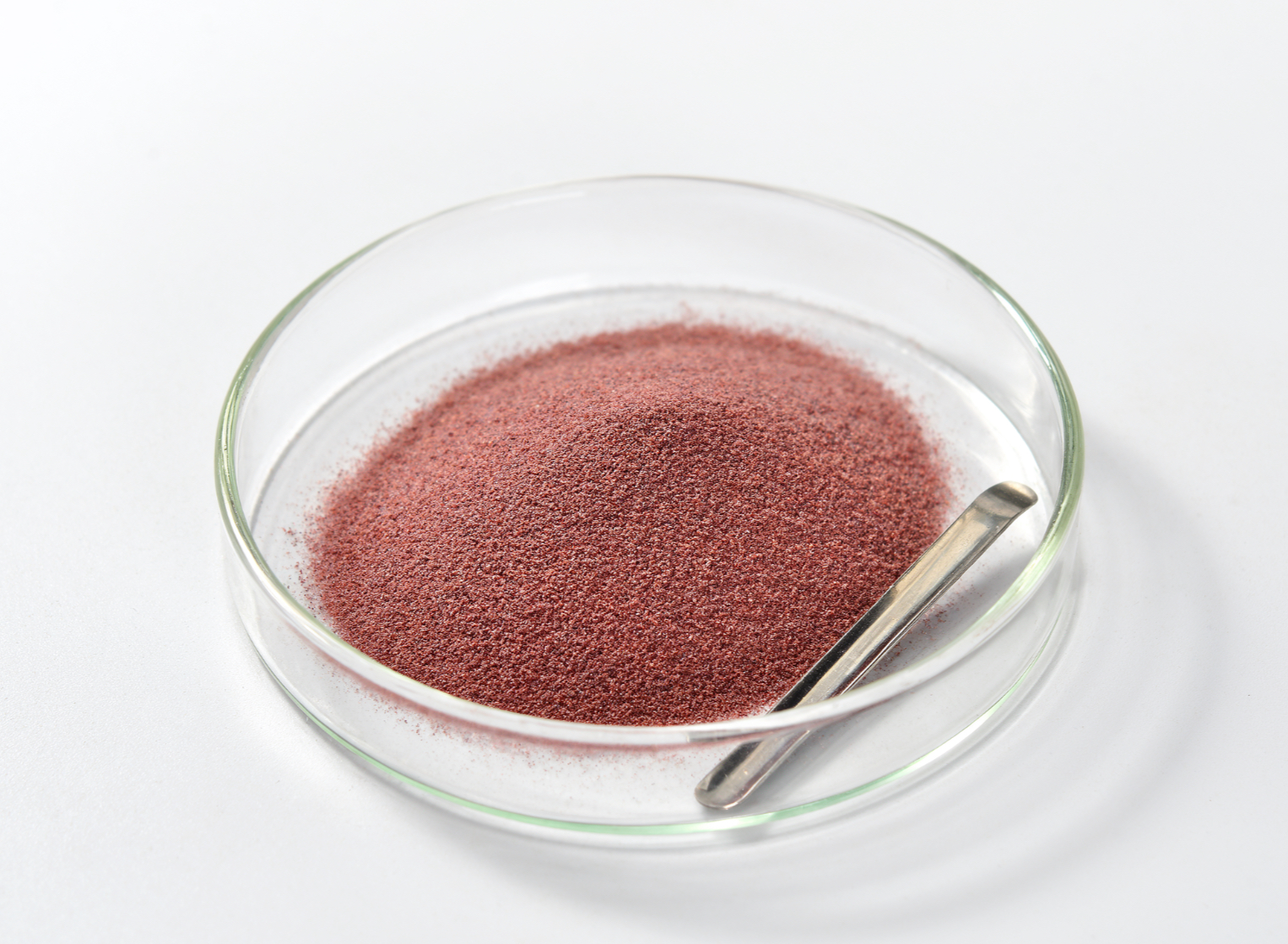
Figure 1: Visual appearance, characteristic reddish-brown crystalline morphology, and fine mesh particle quality of bulk PQQ disodium salt (CAS 122628-50-6).
3. Mitochondrial Synergy: The Golden Triangle (PQQ + CoQ10 + NMN)
In advanced longevity and cellular vitality formulations, leading supplement brands deploy PQQ within a synergistic mitochondrial triad:
- Biogenesis vs. Energy Transfer (PQQ + CoQ10): While CoQ10 acts as an electron carrier within the electron transport chain to produce ATP, it cannot create new mitochondria. PQQ triggers PGC-1α gene expression to stimulate de novo mitochondrial biogenesis. Formulating PQQ alongside our bulk coenzyme Q10 powder wholesale grade delivers comprehensive cellular energy support.
- NAD+ Replenishment (PQQ + NMN): Pairing PQQ with Nicotinamide Mononucleotide activates Sirtuin longevity pathways (SIRT1/SIRT3), protecting newly formed mitochondria from oxidative DNA fragmentation.
- Comprehensive Anti-Aging Matrices: Discover integrated longevity stacks in our mitochondrial energy and anti-aging ingredient solutions portfolio.
4. Beverage Stability: Thermal Tolerance and Optical Clarity
Functional beverage formulators frequently struggle with botanical ingredient precipitation or color fading during pasteurization. PQQ disodium salt exhibits exceptional thermodynamic resilience:
- Heat Stability: Aqueous PQQ solutions withstand standard HTST pasteurization (85°C–90°C for 30 seconds) and autoclave thermal shock without active degradation or HPLC peak shift.
- pH Flexibility (pH 3.0–6.5): PQQ retains its characteristic vibrant orange-red color across acidic beverage conditions, making it an ideal natural active colorant and functional ingredient in functional waters, energy RTDs, and liquid beauty shots.
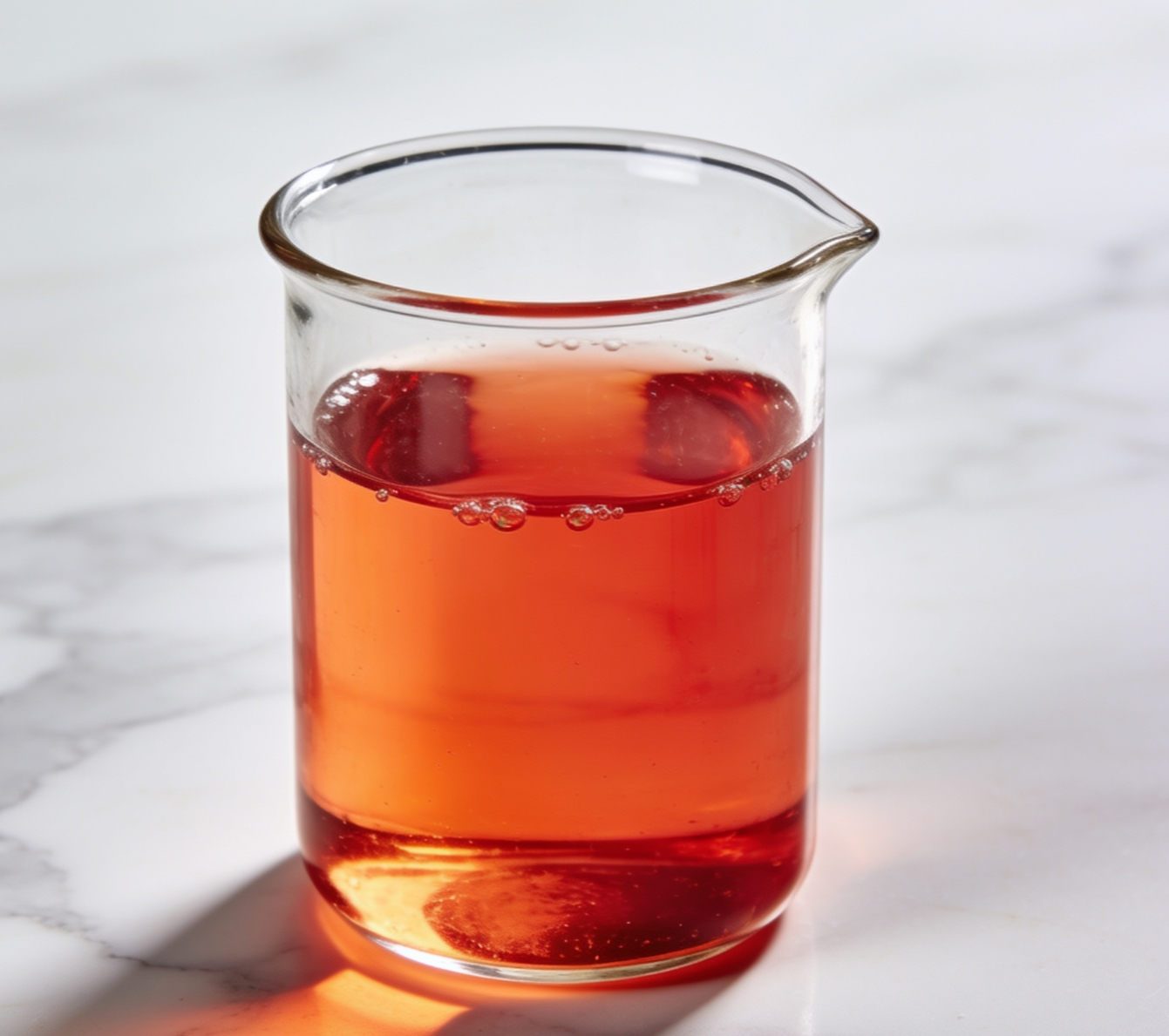
Figure 2: Complete cold-water dissolution and optical transparency of PQQ disodium salt yielding a crystal-clear orange-red aqueous solution for liquid formulations.
5. Quality Control Specifications: Purity, Heavy Metals and COA Auditing
Quality assurance managers auditing commercial PQQ shipments must demand comprehensive batch verification to ensure regulatory clearance across US FDA and international health authorities:
| Quality Parameter | Blueeyes Bio Specification | Analytical Verification Method |
|---|---|---|
| Assay Purity (Dry Basis) | ≥ 98.0% / ≥ 99.0% PQQ Disodium Salt. | Reverse-phase HPLC-UV at 249 nm with calibrated reference standards. |
| Sodium Content | 10.0% – 13.0% (theoretical 12.3%). | Flame atomic absorption spectrometry or ion chromatography. |
| Heavy Metals (ICP-MS) | Lead < 0.5 ppm; Arsenic < 0.5 ppm; Cadmium < 0.1 ppm; Mercury < 0.05 ppm. | Inductively Coupled Plasma Mass Spectrometry, fully Prop 65 compliant. |
| Microbiological Limits | TAMC < 1,000 CFU/g; TYMC < 100 CFU/g; Absence of Salmonella and E. coli. | Pharmacopoeial microbial enumeration testing (USP <2021>/<2022>). |
| Bulk Density & Tap Density | ≥ 0.45 g/mL (optimized for high-speed encapsulation). | USP <616> bulk and tapped density apparatus. |
Request Free 50g R&D Samples & HPLC Batch COAs
Blueeyes Bio supplies high-purity, fermentation-derived PQQ disodium salt (≥ 99.0% HPLC purity) manufactured under ISO 22000, HACCP, and cGMP standards with full Halal and Kosher certification. Submit your target dosage and delivery format to request a free 50g laboratory formulation sample, current batch HPLC chromatograms, and complete technical dossiers.
Request 50g PQQ Sample via WhatsApp
Email: [email protected]
Commercial container quantities (1 kg vacuum foil bags, 25 kg fiber drums), custom pre-mix blending, and rapid global dispatch available.
Frequently Asked Questions
Why is PQQ disodium salt preferred over PQQ free acid in dietary supplements?
PQQ free acid is virtually insoluble in water (< 0.1 g/L), resulting in gritty sedimentation and poor enterocyte absorption. PQQ disodium salt incorporates two sodium ions that stabilize the ionic crystal lattice, increasing cold-water solubility by over 30-fold and ensuring complete optical transparency in liquid formulations.
What is the clinical dosage range for PQQ in nootropic and anti-aging formulas?
Standard clinically evaluated dosage ranges between 10 mg and 20 mg per day for cognitive support, memory retention, and mitochondrial biogenesis. In synergistic longevity formulas, 10 mg PQQ is typically paired with 100 mg–200 mg Coenzyme Q10.
Is PQQ disodium salt stable in pasteurized ready-to-drink beverages?
Yes. PQQ disodium salt demonstrates exceptional heat and pH stability. It withstands standard HTST pasteurization (85°C–90°C) and maintains 100% active recovery in acidic beverages (pH 3.0–5.5) over 18-month ambient shelf life trials without color fading or precipitation.
References and Quality Evidence
[1]Chowanadisai W, et al. “Pyrroloquinoline quinone stimulates mitochondrial biogenesis through cAMP response element-binding protein phosphorylation and increased PGC-1alpha expression.” Journal of Biological Chemistry, 2010.
[2]Itoh Y, et al. “Effect of the antioxidant supplement Pyrroloquinoline Quinone Disodium Salt on cognitive functions.” Bioscience, Biotechnology, and Biochemistry, 2016.
[3]U.S. Food and Drug Administration (FDA). New Dietary Ingredient (NDI) Notification and Generally Recognized as Safe (GRAS) regulatory frameworks.
Evidence limitation: Technical specifications represent Blueeyes Bio standard commercial grade parameters and peer-reviewed scientific literature. Finished product efficacy, shelf life, and label claims depend on the complete formulation matrix and destination market legal regulations.
Technical Summary
Blueeyes Bio supplies fermentation-derived PQQ disodium salt (≥ 99.0% HPLC purity, CAS 122628-50-6) free of chemical synthesis impurities. With superior cold-water solubility, thermal resilience in pasteurized beverages, and proven synergy with CoQ10 and NMN, formulators achieve bioavailable, shelf-stable mitochondrial and nootropic products.


